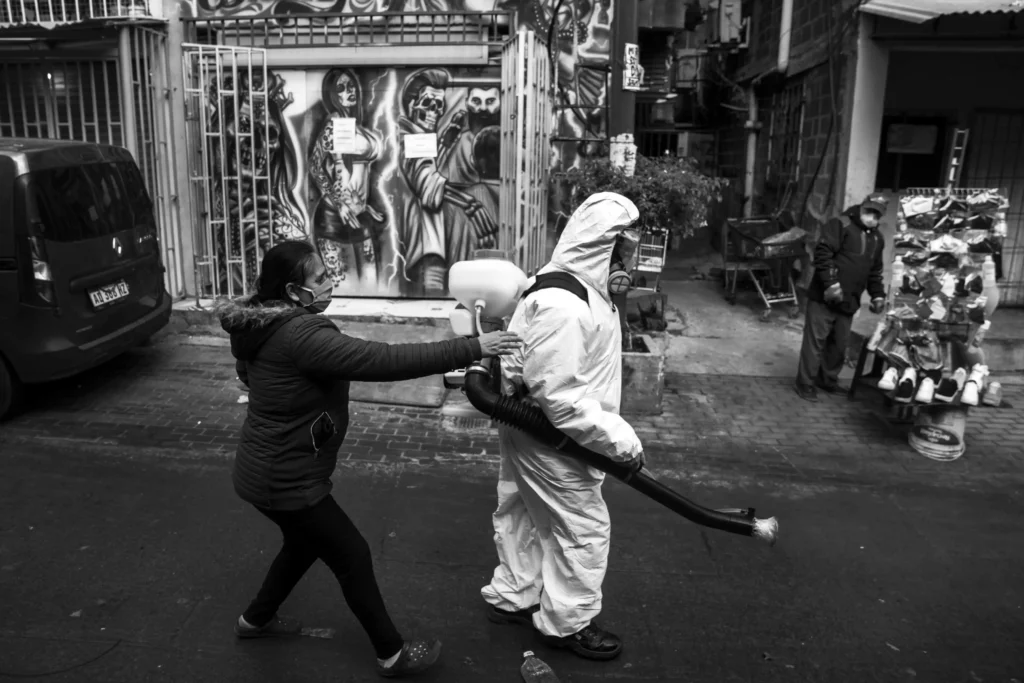
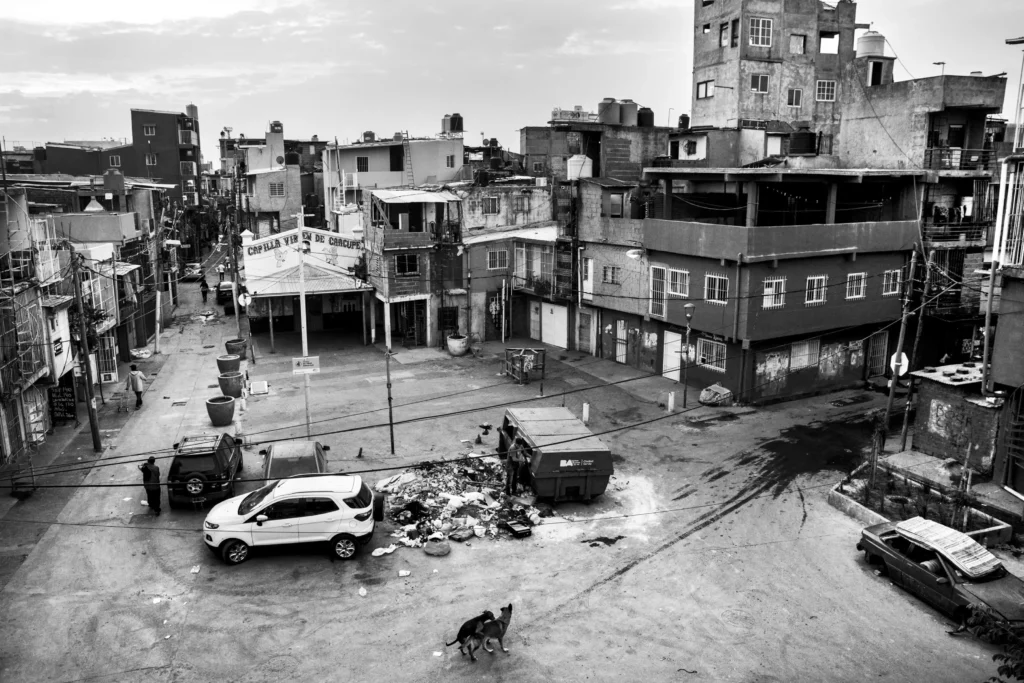
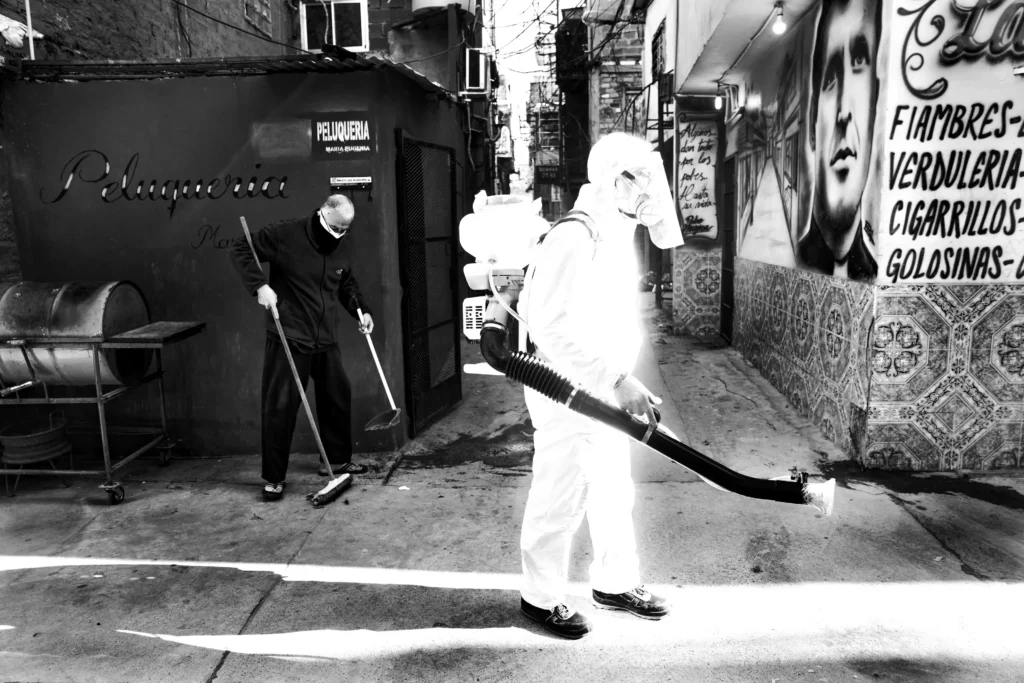
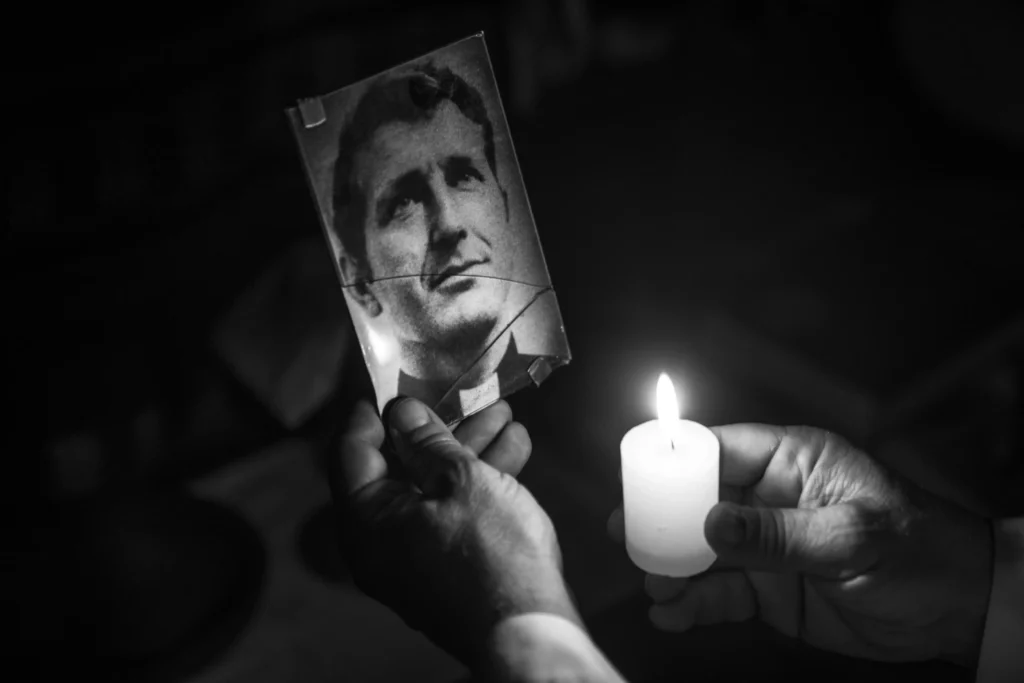
Mid-morning on Monday, May 11. To reach Cristo Obrero Parish, there is no desert to cross. Only the desolate soccer field. Before that come the faded altar to Gauchito Gil and the single-lane bridge. It is the 46th anniversary of the murder of Father Carlos Mugica. In the empty church, Father Guillermo Torre lights candles, glances at a portrait of Pope Francis, and confesses: “On a normal day, this place is packed, but with the virus, it’s not possible. This afternoon I’ll give Mass online.” The temple shelters the remains of the patron saint. A tattooed wall reads: “Lord, I dream of dying for them: help me live for them.” These are Mugica’s words.
In mid-April, Silvana Olivera’s home ran out of water. She lives on a third floor with her three children. On the third day of drought, she gathered her courage, grabbed some buckets, and crossed the entire neighborhood to where the water trucks were. The lines were endless. “That was when the first case became known.” Four weeks later, there are more than 800: “I believe in social organizations, in the solidarity ties among neighbors, in grassroots militancy. As for the City Government, forget it.”
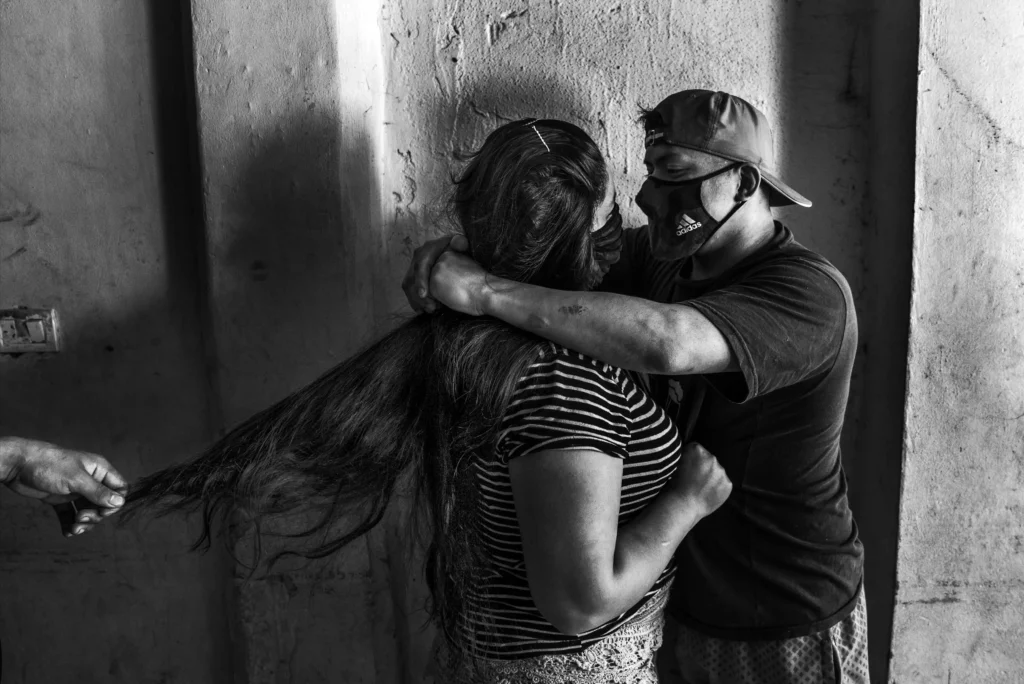
Our daily stew is prepared by Alicia García at the Arca de Noé soup kitchen, one of the 68 active in the neighborhood. The pot is filled with noodles, zucchini, sweet potato, pumpkin, onion, and meat: “What I miss from before quarantine is talking with the neighbors. Now it’s just filling containers from a distance. I can’t even give them a hug. Because here we are family, you understand?”
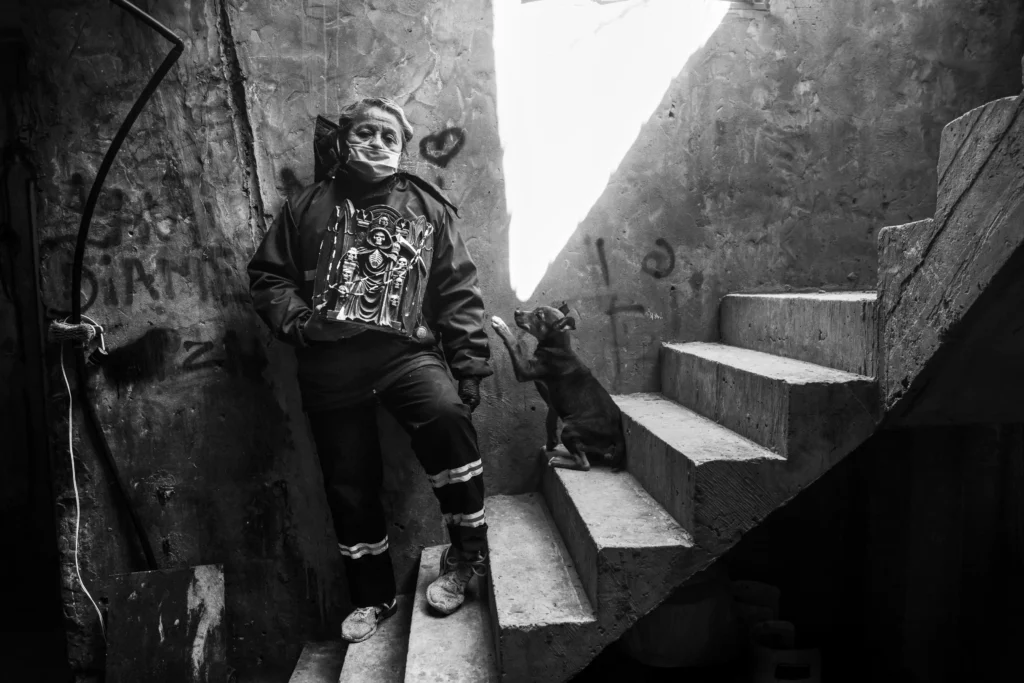
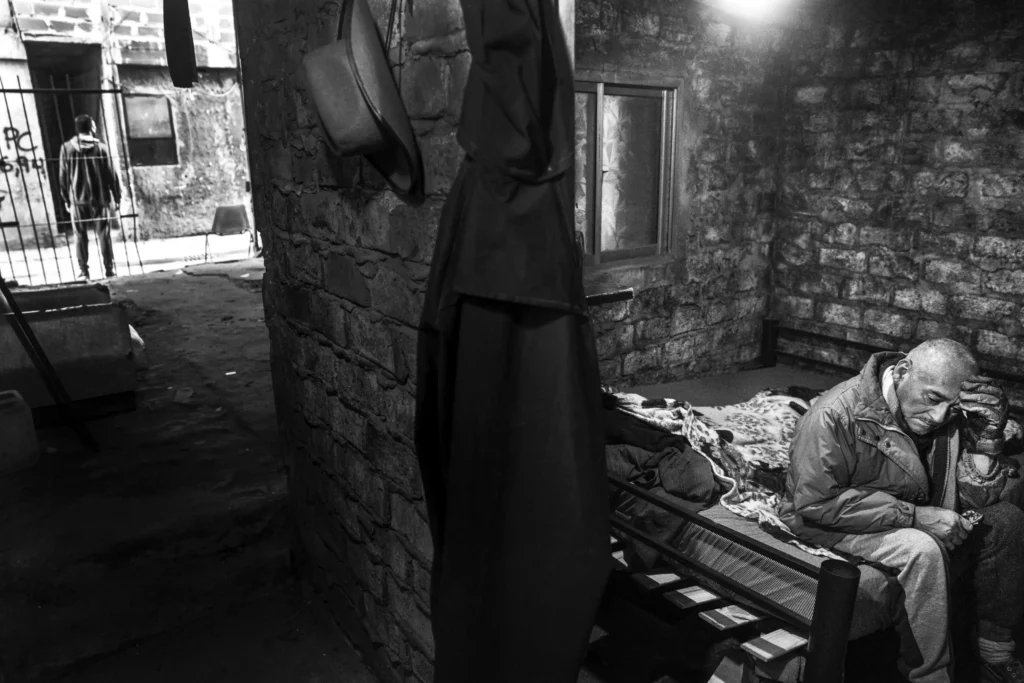
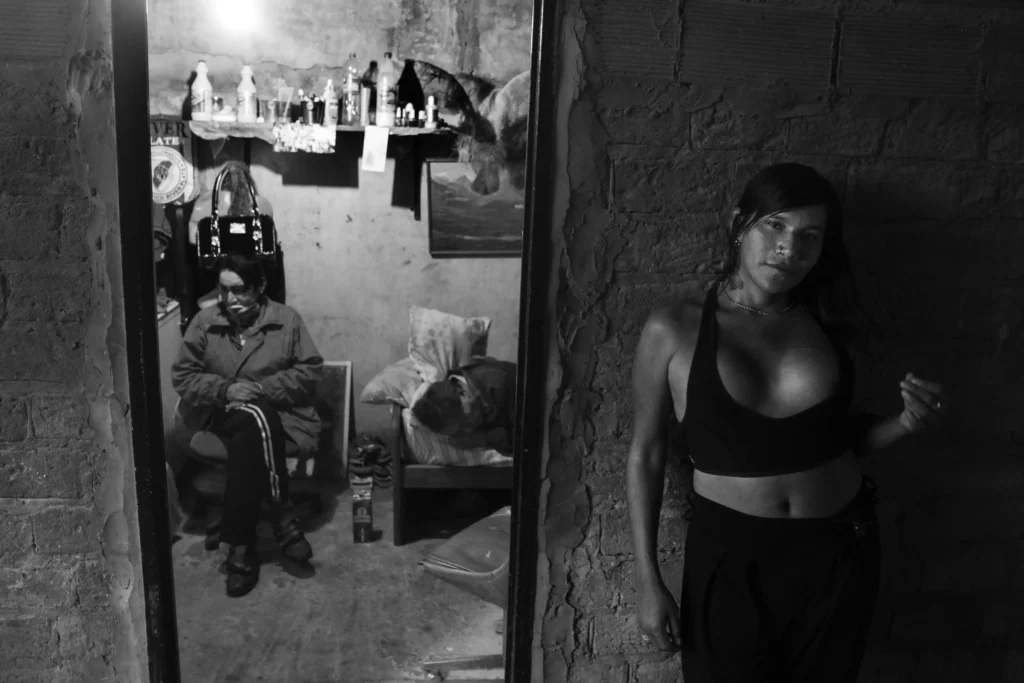
She is not a saint, and her name is not María. Karen Ferreyra Vela is a trans sex worker. She has gone two days without eating: “At the soup kitchen there’s a waiting list; first they feed families with children.” In the alleyway, a barrel organ plays, along with the heavenly cumbia chorus of Los Dinos: “Until dawn, we’ll make, we’ll make love.” Karen blows a kiss into the air and whispers: “Don’t you have a little sandwich?”
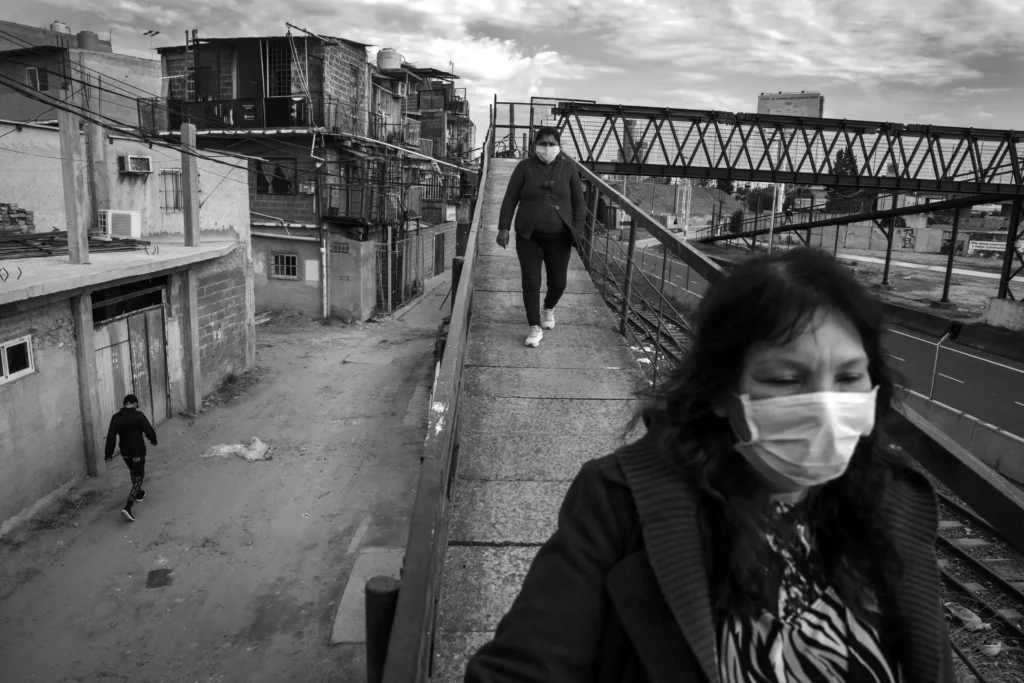
Lorenza Martínez says she no longer believes in miracles. That is why she is resisting eviction in the middle of quarantine. “It seems like I don’t exist for the government, but here I am, house 215, block 12.” The seamstress with Paraguayan roots chews on her anger behind her homemade face mask. Neither God, nor the Virgin of Caacupé, nor the State gave her a hand: “No, sir, I’m not afraid of the virus. When the people from the government came, I told them that maybe the virus will take me. But I’m not leaving here. This is my home. This is how I’m fighting.”
In the name of Ramona Medina, Víctor Giracoy, and all the neighbors of Villa 31. Amen.
Text: Nicolás G. Recoaro, published in Rolling Stone magazine.